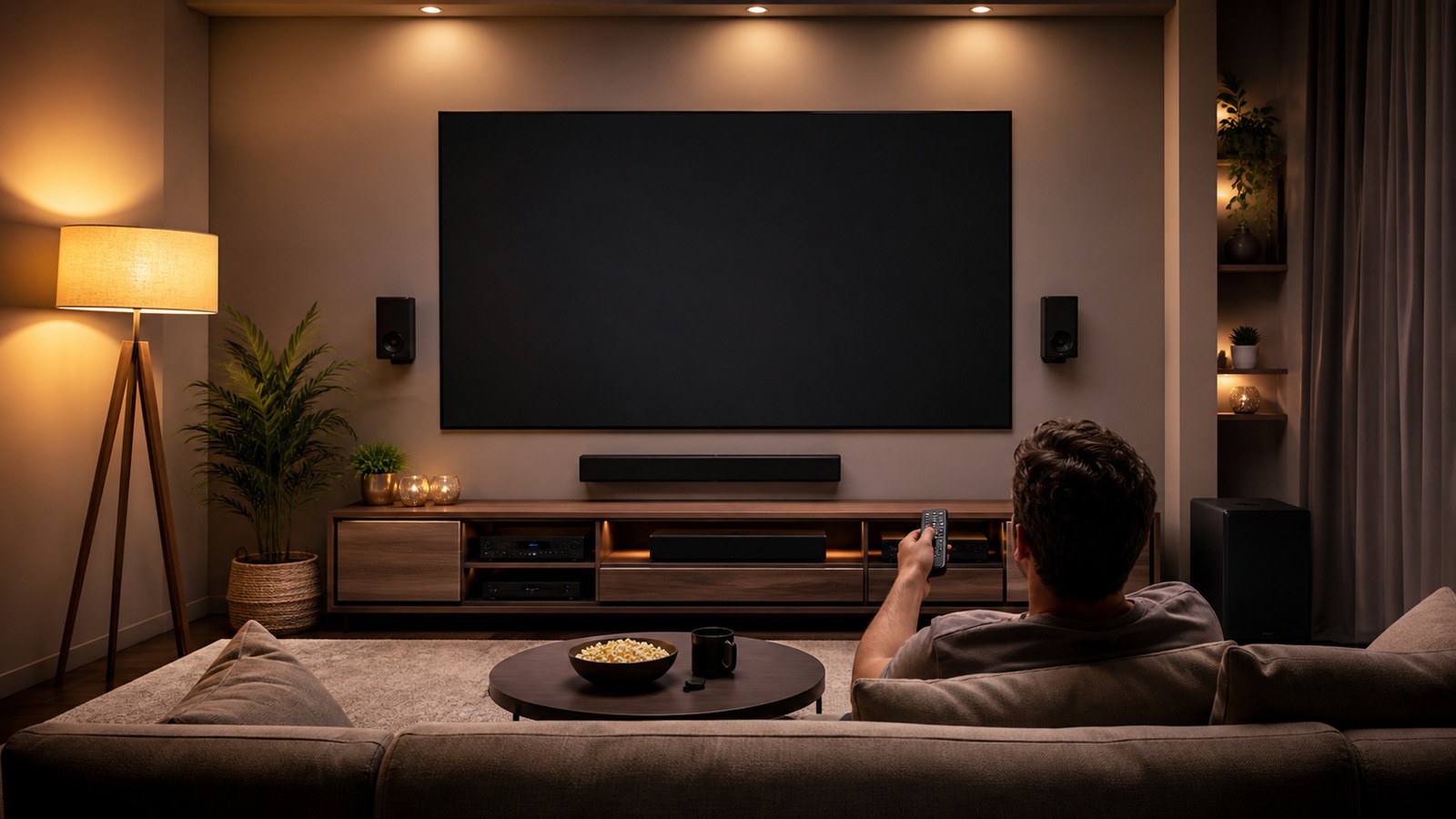
Best Home Entertainment Systems for Movies, Sports, Gaming, and Streaming
A great home entertainment system is no longer reserved for dedicated theater rooms or luxury estates. Today, a living room, basement, apartment, bedroom, loft, or outdoor patio can become a powerful entertainment zone with the right mix of screen, sound, streaming, gaming, lighting, and layout. The best systems do not simply play content. They create atmosphere. They make a movie feel cinematic, a championship game feel electric, a video game feel responsive, and a streaming night feel effortless. Home entertainment has changed because the way people watch has changed. One household may use the same system for blockbuster films, live sports, console gaming, music streaming, fitness classes, YouTube, family shows, and late-night comfort viewing. That means the best setup is not always the biggest or most expensive. It is the setup that matches your space, your habits, your devices, and your expectations. The modern home entertainment system is built around balance. A massive screen with weak audio feels incomplete. A powerful surround sound system paired with a dim display misses the mark. A beautiful TV with clumsy streaming apps becomes frustrating. The magic happens when everything works together: picture, sound, connectivity, comfort, control, and room design.
A: A large 4K smart TV, quality soundbar with subwoofer, streaming device, and clean cable setup is a strong choice for most homes.
A: A projector is better for huge cinematic images, while a TV is usually better for brightness, gaming, sports, and daily convenience.
A: Not always. A soundbar can be enough, but surround sound adds more immersion for movies and games.
A: Brightness, motion handling, screen size, viewing angle, and reliable live streaming access.
A: Low input lag, HDMI 2.1, 4K 120Hz support, VRR, strong HDR, and fast response.
A: Contrast, black levels, HDR performance, dialogue clarity, bass, and immersive lighting.
A: A good smart TV may be enough, but a streaming device can improve speed, app support, and interface quality.
A: Very important for 4K streaming, live sports, cloud gaming, and households with multiple devices.
A: Center it below or near the TV, keep it unobstructed, and avoid placing it inside a closed cabinet.
A: Use cable raceways, labeled cables, wall mounts, a media console, and hidden power routing where appropriate.
Start With the Room, Not the Gear
Before buying any home entertainment equipment, look at the room. The room decides more than most buyers realize. A bright family room needs different equipment than a dark basement theater. A small apartment needs different audio choices than a large open-concept space. A sports-heavy household may prioritize brightness and motion, while a movie-focused home may care more about contrast and immersive sound.
Room size affects screen size, speaker power, seating distance, and cable planning. If the seating is far from the display, a larger TV or projector may be necessary. If the space is compact, a 55- or 65-inch TV with a strong soundbar may feel more natural than a giant screen that overwhelms the room. For larger media rooms, a 75-inch or larger TV, ultra short throw projector, or traditional projector can deliver a more theater-like feel.
Lighting is just as important. Rooms with daylight, windows, and reflective surfaces benefit from bright TVs, glare control, and flexible shades. Dark rooms allow OLED displays, projectors, and cinematic lighting to shine. If your room changes from bright daytime viewing to dark nighttime movies, a high-brightness Mini LED TV or a carefully chosen projector setup may offer the best balance.
The Display: TV or Projector?
The screen is the visual anchor of any home entertainment system. For most homes, a large smart TV is the easiest and most versatile choice. TVs are bright, simple to use, great for sports, excellent for gaming, and reliable in rooms with mixed lighting. They also work well with soundbars, streaming devices, gaming consoles, and wall mounts. OLED TVs are ideal for movie lovers who want deep blacks, rich contrast, and a cinematic image in a controlled-light room. QLED and Mini LED TVs often work better in bright spaces because they can deliver stronger overall brightness. Standard LED TVs remain useful for budget-friendly setups, secondary rooms, and casual entertainment areas.
Projectors offer a different kind of experience. They create scale. A 100-inch or larger image can make movies feel grand and sports feel stadium-sized. Traditional projectors are best in rooms where lighting can be controlled. Ultra short throw projectors are more living-room friendly because they sit close to the wall or screen, but they still perform best with the right projection surface. The decision between TV and projector comes down to lifestyle. If you watch during the day, play games often, and want simple daily convenience, a TV is usually the safer choice. If you want a cinematic room for evening movies, big sports events, and immersive viewing, a projector can be unforgettable.
Sound Is Half the Experience
A home entertainment system without good sound is only half-built. Modern TVs are thin, stylish, and wall-friendly, but that thin design leaves little space for powerful speakers. Built-in TV audio can work for news, casual shows, or background viewing, but movies, sports, and games need more depth.
A soundbar is the most popular audio upgrade because it is simple, compact, and effective. A basic soundbar improves dialogue clarity and gives the TV a wider soundstage. A soundbar with a wireless subwoofer adds bass for action scenes, music, and gaming. Premium soundbars with surround speakers and upward-firing drivers can create a more immersive experience without the complexity of a full receiver-based system.
A traditional surround sound system is still the gold standard for serious home theaters. With an AV receiver, front speakers, center channel, rear surrounds, and one or more subwoofers, the room becomes a true audio environment. Dialogue comes from the center, effects move around the room, and bass has real physical impact. This type of system requires more planning, wiring, calibration, and space, but the payoff can be spectacular. For many households, the best choice is a middle path: a high-quality soundbar system with a subwoofer and optional rear speakers. It keeps installation manageable while delivering a dramatic improvement over TV speakers.
Best Systems for Movies
A movie-focused home entertainment system should feel cinematic. That means contrast, dark-room performance, clean dialogue, deep bass, and immersive sound. The ideal setup might include an OLED or high-end Mini LED TV, a premium soundbar with Dolby Atmos support, a subwoofer, and ambient lighting behind the screen. Movie lovers should pay attention to black levels and HDR performance. Dark scenes should reveal detail instead of looking gray or muddy. Bright highlights, such as explosions, sunlight, neon signs, and reflections, should feel vivid without washing out the image. A good TV picture mode can also make films look more natural by avoiding overly sharp, overly bright, or artificially smooth settings.
Sound matters just as much. A strong center channel or dialogue-focused soundbar helps voices stay clear. A subwoofer adds weight to action, music, and dramatic moments. Surround speakers make rain, traffic, crowds, and movement feel like they exist beyond the screen. For a dedicated movie room, consider blackout curtains, acoustic panels, a large display, comfortable seating, and dimmable lighting. For a living room, the same idea can be simplified with a big TV, good soundbar, subtle lighting, and a clean media console.
Best Systems for Sports
A sports-focused entertainment system has different priorities. Brightness, motion handling, screen size, and viewing angle become essential. Sports are often watched during the day, with friends, in bright rooms, from multiple seating positions. A TV that looks great in a dark theater mode may not be ideal for a lively game-day environment.
A bright QLED or Mini LED TV is often a strong choice for sports because it can fight daylight and maintain punchy color. A 65-inch, 75-inch, or larger screen helps viewers follow the field, court, track, rink, or scoreboard more easily. Motion handling is important because fast camera pans, flying balls, skating, racing, and quick player movement can expose blur or uneven processing.
Audio for sports should emphasize crowd energy and announcer clarity. A soundbar with a dedicated center channel can keep commentary understandable while still adding stadium atmosphere. A subwoofer gives impact to crowd noise, music, and big moments. For sports households, the best setup may also include reliable Wi-Fi or Ethernet, live TV streaming access, a comfortable sectional, easy snack-table placement, and lighting that does not reflect directly on the screen. The goal is not just picture quality. The goal is a room that feels ready for the big game.
Best Systems for Gaming
Gaming changes the entertainment equation because responsiveness matters. A gaming-focused home entertainment system should have low input lag, a high refresh rate, HDMI 2.1 support, strong HDR, and a screen size that feels immersive without becoming uncomfortable. Modern consoles and gaming PCs can benefit from 4K resolution, 120Hz refresh rates, Variable Refresh Rate, and Auto Low Latency Mode. These features help games look smoother and feel more responsive. For competitive games, input lag may matter more than ultimate picture quality. For cinematic adventure games, contrast, HDR, and audio immersion become more important.
OLED TVs are popular among gamers because of their fast pixel response, rich contrast, and dramatic image quality. Mini LED gaming TVs can be excellent choices for bright rooms and large screens. The best choice depends on how you play. A dark-room single-player gamer may love OLED. A family gaming room with lots of daylight may be better served by a brighter LED-based display.
Sound can also transform gaming. A good soundbar or surround system makes footsteps, engines, weather, explosions, and environmental effects more directional and exciting. For late-night gaming, wireless headphones can provide private immersion without disturbing the rest of the house.
Best Systems for Streaming
Streaming-focused systems should be fast, simple, and flexible. The best setup is one where apps open quickly, menus feel smooth, shows are easy to find, and the picture quality remains strong across different services. A smart TV platform can make or break the daily experience. Some viewers prefer simple app grids. Others like recommendation-heavy interfaces. Some households rely on voice search. Others want compatibility with a specific ecosystem. If the TV’s built-in platform is slow or cluttered, a dedicated streaming device can instantly improve the experience.
Streaming quality also depends on internet performance. A beautiful TV cannot fix weak Wi-Fi, buffering, or low-bitrate video. For 4K streaming, stable internet matters. If possible, use Ethernet for the main entertainment system or place a strong router or mesh node nearby. This is especially helpful for households that stream live sports, high-resolution movies, cloud games, or multiple devices at once. For streaming, convenience is the luxury. The best system makes it easy to jump from a movie to a live event, from a family show to a music app, or from a fitness class to a game console without fighting remotes, cables, or confusing menus.
Wireless vs Wired Entertainment Systems
Wireless home entertainment has become more powerful, but “wireless” does not always mean cable-free. Many soundbars have wireless subwoofers and rear speakers, but those speakers still need power outlets. Wireless streaming devices reduce clutter, but the TV, console, router, and audio gear still need electricity and sometimes HDMI connections.
The appeal of wireless systems is simplicity. They are easier to install, cleaner to look at, and more flexible in living rooms where running speaker wire is difficult. Wireless speaker ecosystems can also expand into multi-room audio, letting music play throughout the home.
Wired systems remain strong for reliability, low latency, and maximum audio performance. Traditional surround systems, Ethernet connections, and direct HDMI paths can offer more stable results. For dedicated theater rooms, wired systems are often worth the effort. For everyday living rooms, wireless or semi-wireless systems usually make more sense. The best approach is practical: use wired connections where reliability matters most, and wireless convenience where it keeps the room cleaner.
Smart Controls and Everyday Convenience
A powerful system should not require five remotes and a technical manual. Smart control is one of the most underrated parts of home entertainment. A great setup should let users turn everything on, switch inputs, adjust volume, open apps, and control lighting without frustration.
Universal remotes, voice assistants, smart home hubs, and HDMI-CEC can simplify control. Voice commands can be useful for searching content, adjusting volume, launching apps, or dimming lights. App-based control can help when remotes disappear into couch cushions. However, simplicity is the goal. Too much automation can become confusing if it is not reliable. A good entertainment system should be easy for guests, kids, partners, and less technical family members to use. The ultimate test is whether someone can sit down, turn it on, and enjoy it without asking for help.
Lighting, Furniture, and Room Design
Home entertainment is not only electronics. It is environment. Lighting affects screen visibility, mood, eye comfort, and the overall sense of immersion. Harsh overhead lights can create glare and flatten the experience. Soft lamps, dimmable lights, and bias lighting behind the screen can make the room feel more comfortable.
Furniture matters too. Seating distance, seat height, viewing angle, and comfort all influence the experience. A premium TV mounted too high can feel awkward. A great sound system hidden behind poor furniture placement can lose clarity. A beautiful media console that blocks a soundbar or traps heat around equipment can create problems.
Cable management is another detail that separates a polished setup from a messy one. Raceways, in-wall kits, media cabinets, labeled cables, and thoughtful power placement make the system easier to use and maintain. A clean setup feels more premium, even when the equipment is not ultra-expensive.
Budgeting for the Whole System
Many people spend nearly the entire budget on the screen and forget the rest. That can lead to weak sound, messy cables, poor mounting, uncomfortable seating, or streaming frustration. A better approach is to budget for the complete experience.
A starter system might include a solid 4K smart TV, a basic soundbar, a streaming device, and cable management. A midrange system might add a larger screen, better HDR performance, a soundbar with subwoofer, improved lighting, and a universal control solution. A premium system might include a high-end OLED or Mini LED TV, Dolby Atmos audio, rear speakers, gaming-ready HDMI 2.1 ports, acoustic treatments, and a carefully designed room. The best value often comes from balance. A slightly smaller TV with better contrast and a stronger sound system may deliver more enjoyment than the largest screen with weak audio. A clean, easy-to-use setup often feels better than an expensive system that is frustrating to operate.
The Best Home Entertainment System Is Personal
There is no single best home entertainment system for everyone. The best system for a movie lover may be too dark-room focused for a sports household. The best gaming setup may prioritize features a casual streamer never needs. The best apartment setup may rely on a soundbar and compact TV, while the best basement setup may use a projector and full surround sound.
The right question is not “What is the best system?” The right question is “What system is best for how this home lives?” When you start with your content, room, seating, lighting, devices, and budget, the answer becomes much clearer.
A great home entertainment system should feel exciting every time you use it. It should make movie nights more cinematic, sports more social, games more responsive, and streaming more effortless. When the screen, sound, controls, and room all work together, your home becomes more than a place to watch. It becomes the best seat in the house.