
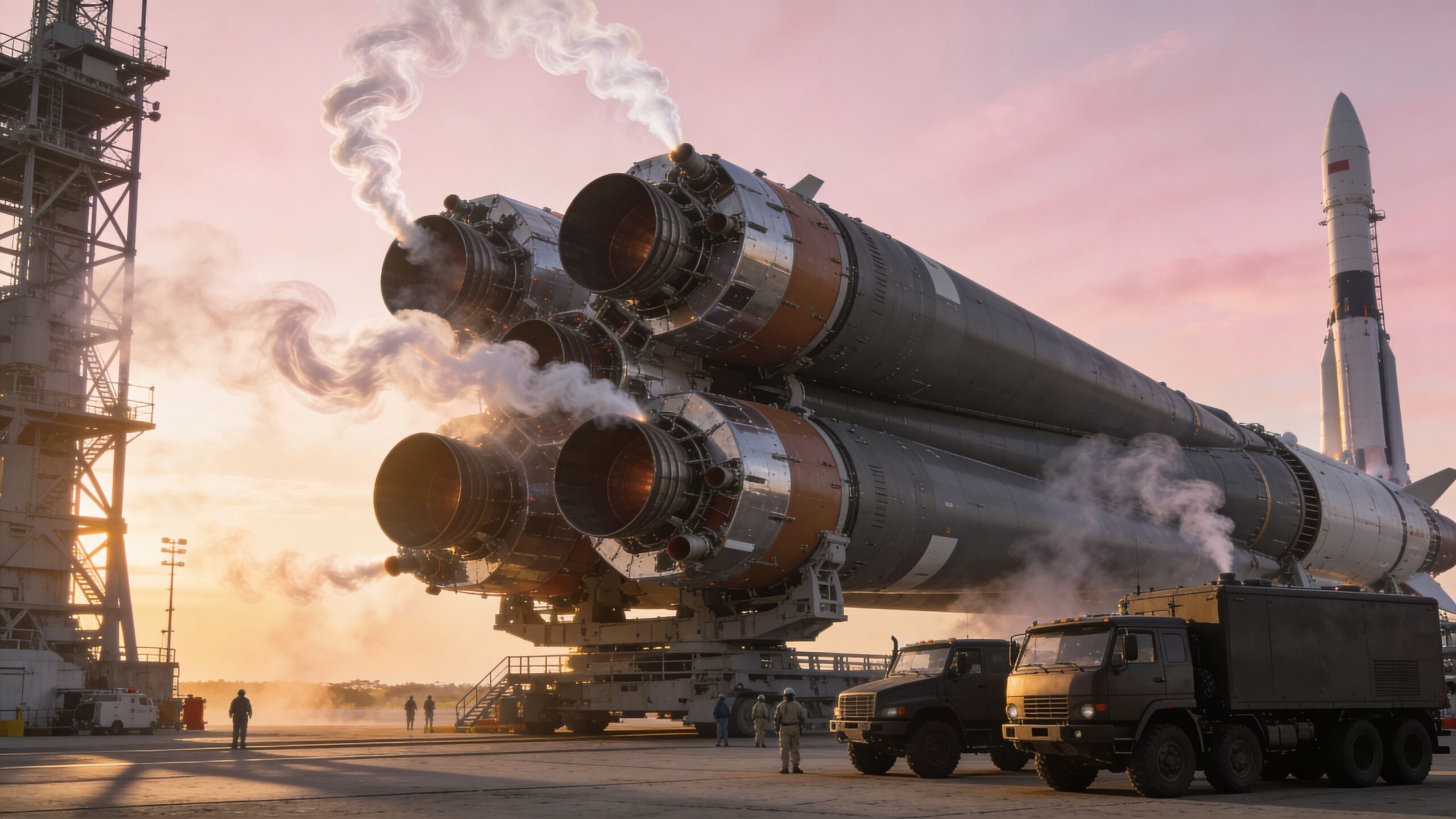
Space Technology is the engineering of distance, darkness, and extremes—where hardware must survive vacuum, radiation, wild temperature swings, and months of silence. It’s also the toolkit that quietly powers everyday life: weather forecasts, navigation, global communications, disaster response, precision agriculture, and scientific discovery. On this page, you’ll find articles that explore how rockets, satellites, and space instruments are designed, launched, operated, and upgraded—plus the new wave of reusable systems, small satellites, on-orbit servicing, and deep-space missions pushing farther than ever. We’ll dive into the technologies that keep spacecraft alive: power generation, propulsion, guidance, thermal control, and resilient communications. You’ll also see how space data becomes actionable intelligence back on Earth, and why space systems are increasingly built like scalable platforms instead of one-off machines. If you’re curious about what it takes to build in the harshest environment we know, Space Technology is your gateway.
A: Rockets deliver payloads to space; satellites are the payloads that operate in orbit.
A: Orbits trade coverage, latency, resolution, and fuel needs.
A: Batteries supply power when solar arrays aren’t in sunlight.
A: Sensors plus actuators like reaction wheels and thrusters form the control system.
A: Shielding, radiation-tolerant parts, error correction, and fault protection routines.
A: The stations, networks, software, and teams that command spacecraft and receive data.
A: Individually yes, but constellations can deliver strong combined capabilities.
A: Reusing hardware can reduce cost and increase launch cadence.
A: Through analytics for weather, mapping, communications, navigation, and monitoring.
A: Satellite basics: orbits, power, comms, and attitude control.