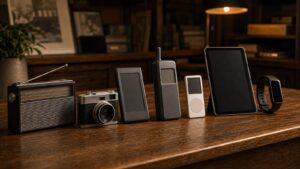
Q: What makes a device iconic?
A: A blend of innovation, cultural impact, design influence, and lasting recognition.
Q: Do iconic devices always succeed commercially?
A: Not always—some gain influence despite limited sales.
Q: Why study older devices?
A: They reveal design decisions and engineering trade-offs shaping modern technology.
Q: How do ecosystems affect device success?
A: Software, services, and accessories amplify usability and adoption.
Q: Are iconic devices still relevant?
A: Yes, as design and engineering reference points for modern products.
Q: What role does nostalgia play?
A: Nostalgia reinforces cultural recognition and collector interest.
Q: How are iconic devices preserved?
A: Through museums, restoration, emulation, and digital archiving.
Q: Do iconic devices influence future design?
A: Frequently—design patterns and interaction models often reappear.
Q: What industries produce iconic devices?
A: Computing, gaming, consumer electronics, mobile, and audio technology.
Q: Where should beginners start exploring?
A: With devices that introduced new categories or interaction paradigms.